Dermal Piercing: Real Pain and Expert Care Tips
Do you want to get better at wearing body jewelry? Dermal piercings are a popular way to get around the fact that some areas have usually been too hard to pierce. Because it goes into the skin rather than through it, dermal piercing can be placed on almost any flat part of the body.
Jessie Darling, a professional body piercer at Taunton Tattoo Company in Ontario, Canada, says, “It’s actually a single point piercing that is anchored to hold tight to the surface of the skin with a beautiful gemstone or flat piece of jewelry on top.” “Placing dermals under the eyes or on the collarbones, back dimples, arms, hips, or chest are the most common places.”
When it comes to these kinds of tattoos, you can do so much. So, we asked Darling and a board-certified dermatologist to tell us everything there is to know about them. Read on to see what they think about skin piercings.
What is a Dermal Piercing?
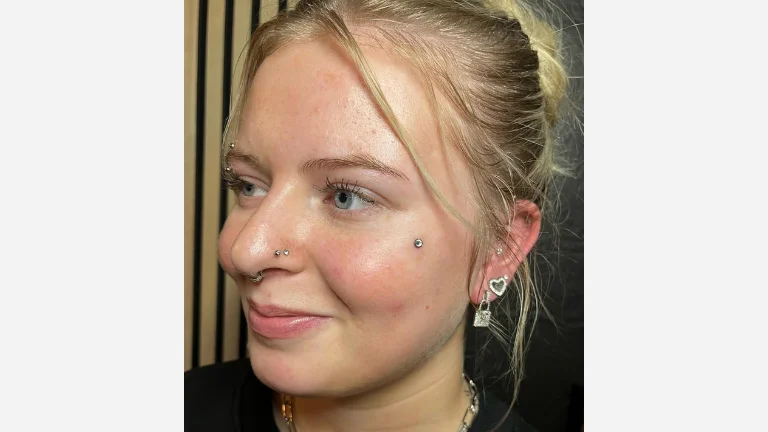
Dermal piercings, which are sometimes called microdermal or single-point piercings, are holes that lie flat on the skin. Since there isn’t an entry and exit point for piercings, the completely flat effect happens when a dermal anchor is put straight under the skin. This anchor is about six or seven millimeters long, and the top of it rests on the top layer of the skin. This makes it look like there are beads right below the surface. The metal is then attached by being screwed into the top of the post.
Surface Piercing vs Dermal Piercing
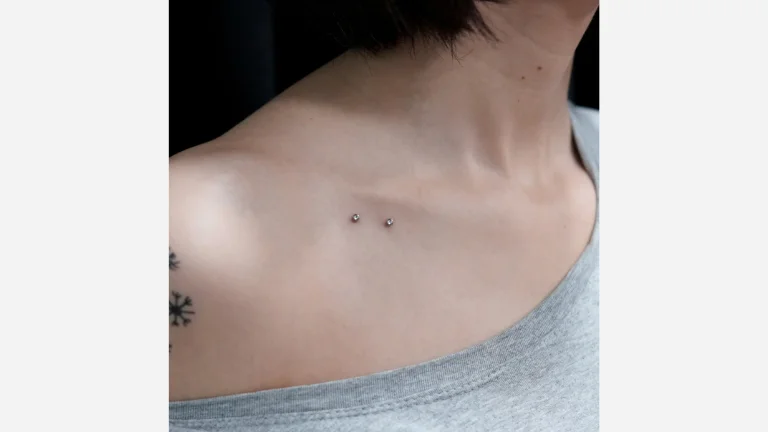
Dermal and surface piercings are not the same, even though many people think they are. Even though it sits on the skin, a dermal piercing can be placed anywhere on the flat body. A surface piercing has two holes: first, the skin is pinched, and a needle is pushed through to create a “passageway” for the jewelry. Then a barbell is placed in the skin so that both ends are visible and the middle is below the surface.
How Much It Hurts to Get a Dermal Piercing
There will be some pain with skin piercings, just as with any other body change. Unless you have a very high pain tolerance, you will probably feel some discomfort, such as a pinch or a deeper sensation.
According to Darling, “Dermal piercings feel like pressure.” Pain levels may differ from those of others because everyone is unique. “Most of the people I’ve worked with say it was better than they thought it would be!”
It’s also pretty, depending on where you put your microdermal. As you choose a piercing site, think about the distance to veins, the skin’s thickness, and the location of the nerves. These are all factors that affect how much a piercing will hurt.
Most Common Places to Get Dermal Piercings
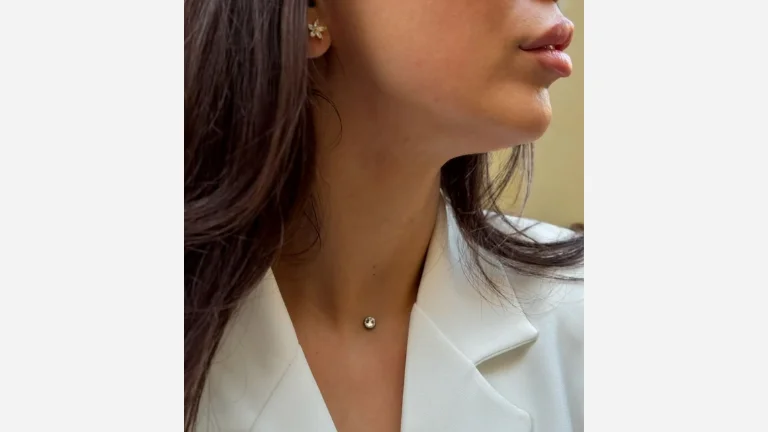
As stated earlier, one of the best things about dermal piercings is that they can be put on any flat part of the body. The chest, lower back, thighs, cheekbones, back of the neck, wrist, hand, and even dimples are some of the most popular places for microdermal. With skin piercings, you can pierce it if you can picture it. You can add some flair to a tattoo or a facial trait you love with a microdermal, or you could get a piercing on your neck or wrist to use as jewelry.
How to Get a Dermal Piercing
It is much easier than it looks to do a skin piercing. To prevent germs from entering the fresh wound, the piercer cleans your skin first. Then, they draw a small mark to show where the metal will go.The piercer will quickly use a needle or skin punch to make a hole in the skin. This will create a place, or “pocket,” for the metal to sit in.Then, the piercer pushes the jewelry’s anchor into the small hole and under the skin, either by hand or using a small pair of forceps.
The top is either screwed on or placed on top of the container, depending on the type you chose. It only takes a few minutes to do the whole thing; a good artist will probably spend more time cleaning than cutting.
Darling says, “The area is cleaned really well, [then] marked with a marker to make sure you and I like the placement.” We then use a tool called a “dermal punch” to take out a small (1.5 to 2 millimeters) piece of skin. We then use a taper tool to make space for the anchor base to fit tightly. Finally, we put an anchor base with a pretty top into our pocket and make sure it’s in the right place. You have skin now.
After Care
Darling says, “I tell my clients to clean the area well once a day, pat it dry with a clean paper towel, and then put on a new bandage.” “This routine should be followed exactly for seven days. After the seventh day, no bandage is needed, but good hygiene is important for a happy and healthy skin.”
While it heals, make sure you cover the new pierce for as long as you were told to. After it is uncovered, clean it twice a day with sea salt or a saline solution. Make sure to wipe off any hard buildup gently, then pat it dry with a new paper towel each time to prevent bacteria from spreading. Deanne Mraz, MD, a board-certified dermatologist, also advises avoiding swimming, hot tubs, and baths. At the same time, the piercing heals because “those activities can submerge the open wound in an environment that contains bacteria and irritants.”
Generally, it takes one to three months for a skin piercing to heal fully, but how you care for it will affect the healing time. Dr. Mraz says, “How long it takes to heal can be affected by where you are on your body and how well you follow the aftercare instructions and live your life. For example, the cheeks can take almost eight to twelve months to heal.” It’s normal for a new piercing to crust and swell a little. You should look for signs of illness, though.
There are some things that you might not think about that can make it harder to heal. If the piercing is close to your hair, make sure it doesn’t get caught in the jewelry. You might want to wear your hair up while you heal to keep them separate. When you wear clothes, please don’t wear anything tight around the piercing site so it can breathe, and reduce the risk of infection. Sports and other high-energy activities can lead to crashes, and the extra sweat may increase the risk of infection. Be careful. Please do not touch the piercing when it is not being cleaned, and do not change the jewelry until it has completely healed.
Price
It’s up to the studio to set the price for a dermal piercing. However, if it’s done well by a trusted, experienced piercer, it will usually cost between $70 and $100. Additionally, many shops charge extra for jewelry with the piercing service, so be ready to spend at least $10 and up to $50 or more for metal that looks and feels good.
Along with the base and product prices, a few other steps are needed. It’s normal and expected to tip your piercer for their hard work, just as you would a tattoo artist. The minimum is 20%, but you can provide more if you want to. Aftercare also costs things like saline solution and bandages.
Calling the shop before your appointment to ask about their prices and treatment recommendations is the best way to understand how much a microdermal will cost and how to prepare for the appointment.
Side Effects
Infection: Your new piercing could get infected if the healing process isn’t done right. “Dr. Mraz says, “Go to your doctor right away if you have more pain where you were pierced, if your skin feels hot, or if you see swelling, a rash, discharge, or a bad smell.” It’s not just the wound that shows signs; your jewelry may move, hang, or droop, or come off entirely.
Tissue damage: If an infection from a piercing isn’t treated in time, something worse could happen. The main risk is tissue damage if the piercing is not inserted correctly. A microdermal may attach and pull layers of skin together if it goes too deep. A small piercing, though, could move.
Hypergranulation: This is a red bump that can appear around the piercing when there is too much pressure on the area from tight jewelry, clothing that doesn’t breathe, or other factors.
Scarring: If you play with or take off your jewelry while you are healing, you might get scars. Dr. Mraz says, “Scarring can happen as a keloid (a raised scar) or through hypergranulation, which looks like a raised, red bump that might even push your piercing out.” “If your microdermal is put in too deep or gets infected, your body may reject it and push it out.” Getting pierced by a professional and following all aftercare steps will ensure nothing goes wrong with the healing.
How to Change Jewelry in a Dermal Piercing
You can change the jewelry on the outside once the piercing is healed. You can do it yourself if you are sure you know how. Before drying it, make sure to use saline solution on your wound and antibacterial soap on your hands. Take the ring top off by turning it counterclockwise, but don’t push it if it doesn’t move. Stop the process if there is any pushback. Turn your new necklace clockwise and clean the area again. If your metal won’t come off or if you aren’t sure you’re changing it the right way, you should have your piercer do it instead.
Even if it looks like it, a microdermal isn’t forever. Your skin will grow in a way that pushes the anchor up to the surface and out. It depends on your body and how you take care of it, whether this happens while it’s healing or years later. But if you don’t want to wait for your body to naturally push out the piercing, a professional piercer can take it out for you. Never try to remove a skin piercing yourself.
Darling says, “If you take care of them, dermals can last a long time.” My clients have had dermals for more than 8 years. They could last a long time if you take good care of them. But don’t worry; if you have a dermal you don’t want, a good piercer or your family doctor can take it off, too.
Removing a skin piercing can be done in two ways. The first way is to have a piercer lightly rub the area around the piercing to move the anchor out from under the skin. When it’s no longer tight, the piercer will twist the pin to cut through the skin and pull it out. Most of the time, this is only done on new piercings. For older or stubborn piercings, the piercer will cut a small section with a scalpel or tweezers (depending on the size of the metal) and pull it out. If the piercing has to be removed by cutting the skin, a scar may result. Professionals may use anesthetics to dull the pain.
What Kind of Jewelry goes in Dermal Piercings?
Dermal anchor: Even though they are small, many steps are needed to ensure dermal piercings are correctly placed on the skin. The first important part is the dermal pin, which can be flat-footed or rounded-based. Either one will work, but a flat-footed anchor is more common and more popular. This is because the foot is angled, which makes it less likely to slip off your skin than a rounded-base type.
Dermal Top: The next part is a dermal top, which is the actual metal that can be screwed onto the top of the anchor. It can be taken off and replaced with other tops. Even though it’s possible to change a dermal top, a piercer usually does the changing. If you don’t want to go to a piercing shop every time you want to change your piercing, you could use magnetic tops instead of screw-on ones.
Diver: Sometimes you might see a microdermal with a pointed-end base and metal already in place. This is punched under the skin instead of being injected with a needle. It can’t be changed after it’s in place.

What Kind of Jewelry is Used for Piercings in the Skin?
Titanium (or anodized titanium), surgical-grade stainless steel, and niobium are the metals that are used most often for skin piercings, regardless of whether you can change your jewelry or not. Surgical-grade stainless steel is the most popular and suggested metal for body jewelry, but it might irritate people with sensitive skin. For that last one, titanium (and anodized titanium) is the safest and best choice because it’s the least likely metal to cause pain. Niobium isn’t used as much, but its light weight and hypoallergenic properties make it a good choice at times.
Faqs
Final Verdict
If you take proper care of them, dermal piercings can be styled in many different ways. They look cool and allow piercing body parts that would be hard to pierce otherwise. But here’s one last warning: Be careful when you want to get a microdermal, as some people actually mean skin piercings when they say dermal. The main difference is that a surface piercing is a ring that rests on the skin and has an entry and an exit point.